Open Listening: A Crip Ritual

Updated: Jun 24
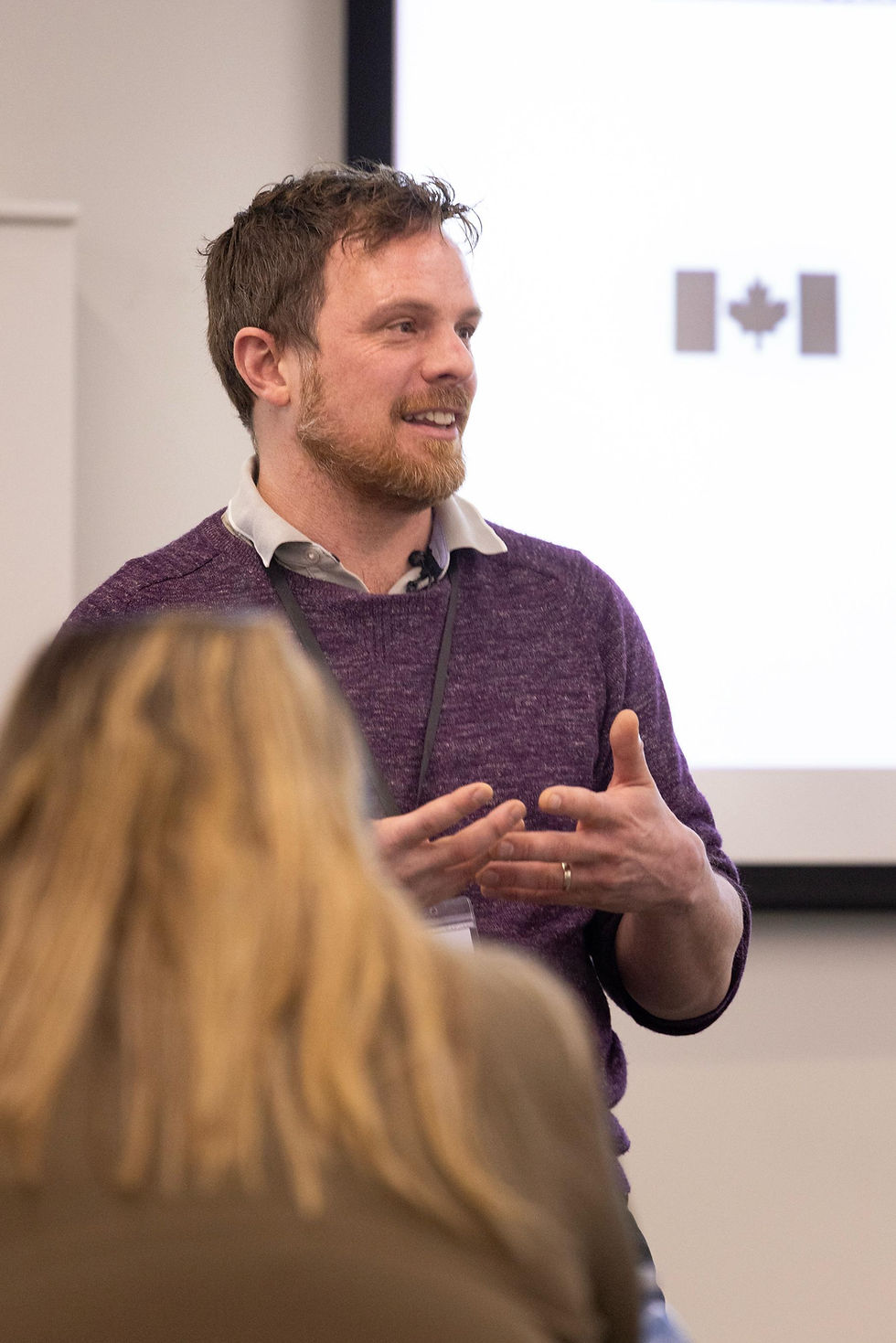
By Joshua St. Pierre
Inspired by SPACE’s Open Listening Workshops, I’ve been thinking about how we listen, how we fail to listen, and how listening can become a practice of access.
Individual Listening and Cultural Listening
Individual listening hears a voice on its own terms—it listens for the individual. When someone speaks, individual listening hears not a person in general, but the specific details of that person before us.
Yet more often than not, we use our cultural sense of listening. This form of hearing works the fastest, but does not hear singular details and textures of the voice. Instead, it gets the coarse sketch of speech using pre-made stereotypes and habits. For example, in the US, northerners often hear the “southern drawl” as being less intelligent and thus fill in gaps with assumptions that the speaker must also be slow-thinking or uneducated. On the other hand, a posh Oxford accent is assumed to be highly intelligent and thus listeners fill in the gaps with assumptions of credibility and authority. Likewise, stuttered speech is often heard through the assumptions that the speaker is anxious, incompetent, or struggling to “get their thoughts straight,” even when none of this is true. In each case, cultural listening collapses the person and their speech into the rough shape of a stereotype that is easy to recognize.
Ears must be trained.
If humans heard all the sounds that swirl about us, the world would be an overwhelming roar. Our ears sense a vast amount of information that they instantly filter and sort through so that random sounds can become shapes we recognize. We filter out “background noise” when sounds become predictable. We then combine the remaining sounds into culturally recognizable chunks like words, phrases, and sentences. This is the very purpose of cultural listening—to use shortcuts to get to meaning fast.
Because the sense of hearing we inherit for everyday life is fast and useful for survival, it is often full of harmful stereotypes and habits that, ironically, make us poor listeners. Here I want to focus on a specific kind of cultural listening: “ableist listening.”
"Dysfluent Speech is alive with meaning if we know how to listen for it."
This is a form of listening trained by culture to recognize only smooth and easy speech that follows able-bodied patterns. It is a form of listening like a high-speed train that works incredibly fast but only if the speech never veers off its expected track. Made of pre-conceptions, ableist listening skips over uncertainty, is impatient, prone to mishearing, and easily confused by disability accents. It finishes sentences and fills in the gaps with assumptions about “missing words,” but also about the meaning and value of the speaker themselves.
From the perspective of ableist listening, the dysfluencies in speech are ignored because, like background noise, they carry less information per second than fluent speech. Repetitions, prolongations, blocks, tics, lisps, and slurs are useless here since they hold no informational value—they just slow listening down. In this way of thinking, dysfluencies waste time such that a good listener should skip them over to get to the “true meaning” of a phrase as fast as possible. However, this is a thin understanding of human listening. We are not, after all, information machines.
Dysfluent speech is alive with meaning if we know how to listen for it.
If ableist listening is learned, it can also be unlearned. If it takes training to listen with cultural ears, it requires re-training to listen individually. Careful listening, like careful reading, has long been understood to be a capacity that must be gained by hard work. It is an ethical practice. Careful listening, what SPACE calls open listening, is less interested in speed than in hearing the voice on its own terms. It is less interested in skimming meaning off the voice than being-with another person. Less interested in hearing everything the first time than having the speaker feel heard. This way of listening is, in a way, unnatural and must therefore be learned and practiced.
"Careful listening, what SPACE calls open listening, is less interested in speed than in hearing the voice on its own terms. "
Throughout history, people have turned to the practice of rituals to train themselves to sense the world in a deeper way. Rituals are structured and repeated practices that transform ourselves and the world. Rituals happen in both religious and secular contexts: think meditation, prayer, chanting, and fasting; or, in secular contexts, mindfulness, deep breathing, and daily walks. Each are ways to discipline the senses to gain access to a deeper understanding of the world around us. Each helps us resist the shortcuts our cultural ears take.
Disability communities have long engaged in ritual practices. As disability scholars Aimi Hamraie, Cassandra Hartblay, and Jarah Moesch write, “Crip ritual highlights strategies for building Crip power: the ceremonies, habits, celebrations, design practices, social scripts, and community agreements, grounded in disabled knowledge and experience, that undergird disability culture” (Hamrai 2022, emphasis added). Rituals work by breaking apart the ordinary. Crip rituals build disability culture and make the world liveable, accessible.
As such, I have started thinking about open listening—in the context of SPACE’s listening workshops—as Crip rituals. Open listening is a structured and repeated practice of listening for the gaps, being open to silence and the unexpected, and allowing meaning to take its own time. Open listening re-trains human perception, gathers disability power, and creates access.
"Universal design...is the practice of re-making environments so that people can show up as their full selves without having to mask or squeeze themselves into narrow norms. "
Ears can create access.
We often think of universal design as something architectural or technological—built into ramps, captions, and sidewalks. As Ronald Mace (a founder of universal design) wrote, “universal design is the design of products and environments to be usable by all people, to the greatest extent possible, without the need for adaptation or specialized design” (1985: 147). But universal design is, at its core, a relational practice. It is the practice of re-making environments so that people can show up as their full selves without having to mask or squeeze themselves into narrow norms.
In the same way, open listening is a practice that changes how we can relate to the world. It re-trains attention, dissolves habits, and opens listeners to forms of communication that typically get filtered out. Open listening thus allows people who stutter to be heard and access the social world without having to contort themselves to norms of fluency.
Universal design, as its name suggests, aims to be universal—to design spaces that are open for everyone, regardless of body shape and need. To use a well-cited example, “curb cuts” were originally designed to make sidewalks accessible for wheelchair users, but it was quickly realized that they also open up public space for skateboarders, travellers with luggage, and parents with strollers. This is called the “curb-cut effect.”
Likewise, open listening is a set of skills designed to help stutterers be heard and thus access the social world. However, open listening is a curb cut that affects everyone! Not only does open listening make the world more accessible for a wide range of non-normative speakers and neurodiverse folk, it also helps able-bodied people deepen their connections through more meaningful communication. In a world of instant connection, people become poor listeners—true communication becomes more rare. Open listening is a radical practice that reopens space to gather with each other in meaningful ways.
Open listening is thus a powerful ritual for building a world where voices can be heard on their own terms—where disabled folk can show up and belong.
--
Joshua is an Associate Professor in the Department of Political Science at the University of Alberta, and is the Canada Research Chair in Critical Disability Studies. He is also a Principle Investigator of Stuttering Commons. He loves to garden.


Comments